From 24/7 Inbox to Hands-Off Income: How to Make Your Airbnb Actually Passive in 2026
Airbnb is famously not passive. Unless you build it that way — with a four-layer stack and the discipline to stay out of layers one through three.
When you bought your STR, somebody — a podcast, a real-estate guru, a friend who was 14 months in and still riding the novelty — used the words “passive income.” Maybe they meant it. Maybe they were just early enough that they hadn't hit the wall yet. Either way, you're a year or two in now and “passive” isn't the word you'd use.
Here's the truth: Airbnb income can be genuinely passive. It just isn't passive by default. Most owners try to make it passive by buying tools, then by hiring cleaners, then by hiring a co-host — in that order — and the math only works when all three layers exist together. Skip any one and the others stop working.
This article is the four-layer stack we build with every Gulf Coast owner who hires us. By the end you'll have the architecture, the cost stack, and a 90-day rollout plan. If you'd rather hand the rollout to someone else, we do that too — but you should understand the design either way.
The ‘passive Airbnb’ lie that broke a generation of hosts
he phrase “passive income” got attached to short-term rentals during the 2020–2022 boom. In a market where listings booked at 80% occupancy with default pricing and no marketing, owners genuinely could buy a property, hand a key to a cleaner, and watch deposits hit. That market is gone.
The 2026 Gulf Coast market doesn't allow autopilot. It rewards operational discipline. The owners who treat STR like a real business get genuinely passive results — because the business runs without them. The owners who keep trying to passive-ize a hands-on approach are the ones we meet at burnout month 24.
The four layers of a truly hands-off STR
Layer 1: Automation tools
These are the digital substrate. They don't make the business hands-off; they make hands-off possible. The non-negotiable stack:
- Property management system (PMS): Hospitable, Hostfully, Guesty, or Hostaway. Centralizes calendar, messaging, and tasks across channels.
- Dynamic pricing tool: PriceLabs, Wheelhouse, or Beyond. Replaces Airbnb's smart pricing with real market intelligence.
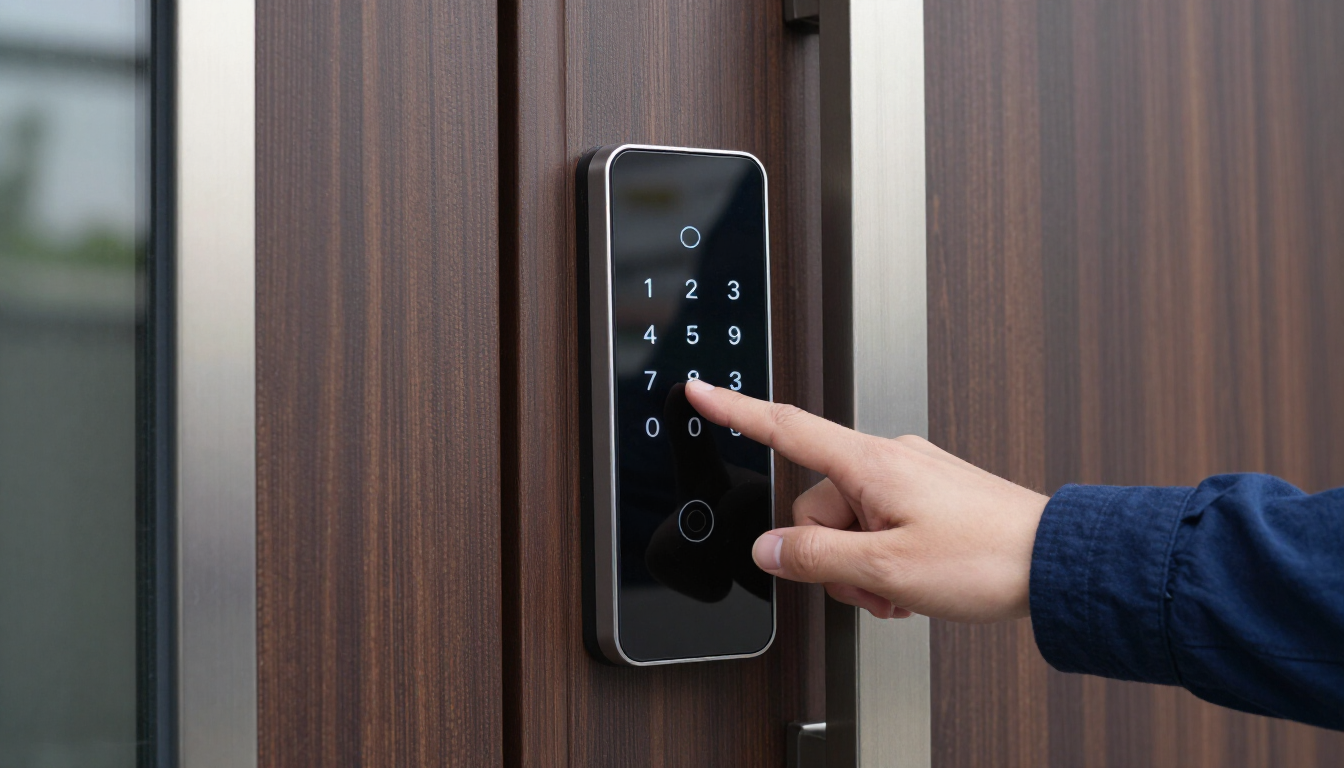
- Smart locks and noise monitors: Schlage Encode or August locks; Minut or NoiseAware for noise. Removes physical key handoff and reduces neighbor complaints.
- Channel manager: comes built into most PMS tools. Required if you're on more than one platform.
- Review automation: triggers for review requests at the optimal moment post-checkout.
Layer 1 alone doesn't make a property passive. It makes the next three layers possible.
Layer 2: Vendor team
Real humans, paid by the visit, doing the physical work. The vendor team:
- Lead cleaner with a backup cleaner (single-vendor cleaning is the most common point of failure)
- Maintenance handyman with same-week response
- Landscaping or pool service if the property has either
- HVAC service contract for spring and fall maintenance
- Restocking and inventory vendor (or absorb into cleaner SOP)
- Hurricane prep / post-storm inspection vendor (Florida-specific)
Building this team well takes weeks. Maintaining it takes ongoing relationship work — the cleaner who's perfect today is the cleaner who burns out next year if nobody is managing the relationship.
Layer 3: Co-host or property manager
This is the keystone layer. Without it, layers one and two don't function as a system — they function as a set of tools that need a coordinator, and that coordinator is you.
What the co-host actually does:
- Owns guest communication 24/7
- Owns dynamic pricing decisions and overrides
- Coordinates the vendor team — schedules cleaners, escalates maintenance, manages the redundancy
- Manages distribution across channels and direct booking
- Handles reviews, AirCover claims, OTA disputes
- Delivers monthly reporting that you actually read
Most owners try to skip this layer because it's the most expensive line item. They keep layers 1 and 2 and try to be the coordinator themselves. This is why “passive Airbnb” doesn't feel passive — you've automated tasks but kept the executive function.
Layer 4: Owner — strategy and review only
If layers 1–3 are healthy, your role becomes:
- Monthly report review (15 minutes)
- Quarterly strategy call with your co-host (45 minutes)
- Capital decisions — furniture refresh, amenity adds, listing repositioning (a few times a year)
- Tax and entity decisions with your CPA
That's it. The 12–18 hours per week become 1–2 hours per month. The dread becomes a once-a-month dashboard check. This is what “passive” actually looks like for an STR — not no work, but no operations.
Why owners who skip Layer 3 always come back to it
We've watched dozens of owners try to assemble a hands-off STR with just tools and vendors. The pattern is identical:
- Buy the tools. Feel briefly empowered.
- Hire cleaners and a handyman. Feel briefly relieved.
- Realize the tools don't make decisions and the vendors don't talk to each other.
- Become the human glue between layers 1 and 2.
- Spend 12–18 hours a week being human glue.
- Burn out at month 24.
The co-host or property manager is what turns a tool stack and a vendor list into a business. There is no version of “passive Airbnb” that excludes this layer. If someone is selling you one, they haven't run a property in this market.
The ‘once-a-month dashboard’ model: what your week actually looks like
An owner with a healthy four-layer stack typically has this rhythm:
- Monday morning, week 1: read last week's quick report (3 minutes)
- First Monday of the month: read the monthly report (15 minutes)
- Quarterly: a 45-minute strategy call with your co-host
- Annually: a tax meeting with your CPA
That's roughly 1–2 hours per month. Some owners scale that down further to 30 minutes. A few choose to engage more — weekly check-ins, deeper involvement in pricing — and we accommodate that. The point is the floor, not the ceiling: you can choose to engage zero hours per week and the property will still run.

Cost stack: what each layer costs and what it returns
| Layer | Typical annual cost | Returns |
|---|---|---|
| Layer 1: Tools (PMS + pricing + locks + monitors) | $1,500–$2,800 | Time savings + 5–12% revenue lift from dynamic pricing |
| Layer 2: Vendor team (cleaning, maintenance, etc.) | Variable, ~$8K–$18K | Operational reliability |
| Layer 3: Co-host (15–20% of gross) | $8K–$15K | 10–20% gross revenue lift + 90% time recovery |
| Layer 4: Owner (15 min/month) | $0 | Strategic alignment, capital decisions |
The 90-day rollout plan
Days 1–30: Tool stack and audit
- Choose and install PMS (or audit existing one)
- Install dynamic pricing tool with rule baseline
- Smart lock and noise monitor installed if not already
- Listing audit, photo prioritization, copy refresh
Days 31–60: Vendor team and operations handoff
- Lead and backup cleaners onboarded with written SOPs
- Maintenance escalation tree documented
- Co-host (or you, if you're rolling solo) takes over guest messaging fully
- Multi-channel distribution activated
Days 61–90: Steady state and reporting
- First full monthly report
- First quarterly strategy call
- Owner role narrows to once-a-month dashboard check
What to keep doing yourself
Some tasks shouldn't be delegated. Reserve these for yourself:
- Reading your own reviews (don't outsource this; you need the signal)
- Final approval on pricing strategy shifts (your co-host proposes, you approve)
- Capital decisions: furniture refreshes, amenity adds, major repairs
- Tax planning, entity structure, depreciation strategy
- Annual market check: is your submarket still the right place to own?
Frequently Asked Questions
Can I make Airbnb truly passive without a co-host?
Not in 2026. You can automate tasks, but the executive function — deciding what to do, when, and how to coordinate vendors — has to live somewhere. A co-host is the cheapest place to put it.
Isn't a co-host just a property manager with a different name?
No. A co-host operates your listing under your account; a property manager owns the listing under theirs. The structural difference matters when you switch operators.
What if I have multiple properties?
The four-layer stack scales nicely. Your tool stack is shared across properties. Your vendor team gets stronger with volume. A co-host with a portfolio of similar properties brings cross-property optimization that single-property owners can't access.
How much should I budget for the full hands-off transition?
First-year setup typically costs $1,500–$3,500 in tools and one-time fees, plus the co-host percentage on bookings starting from go-live. By year two the only ongoing cost is the percentage.
Want help building the stack?
We do this for Gulf Coast owners as a turnkey 90-day rollout. You'll have all four layers operational, your time on the property under one hour a week, and a clean monthly report you actually want to read. Email Geoffrey@cjrstays.com or book at https://calendly.com/geoffrey-cjrstays/property-review-gs.

CJR Stays Blog